MCP Server Security for Production Data Environments
Governed datasets through MCP prevent agents from accessing production databases directly.
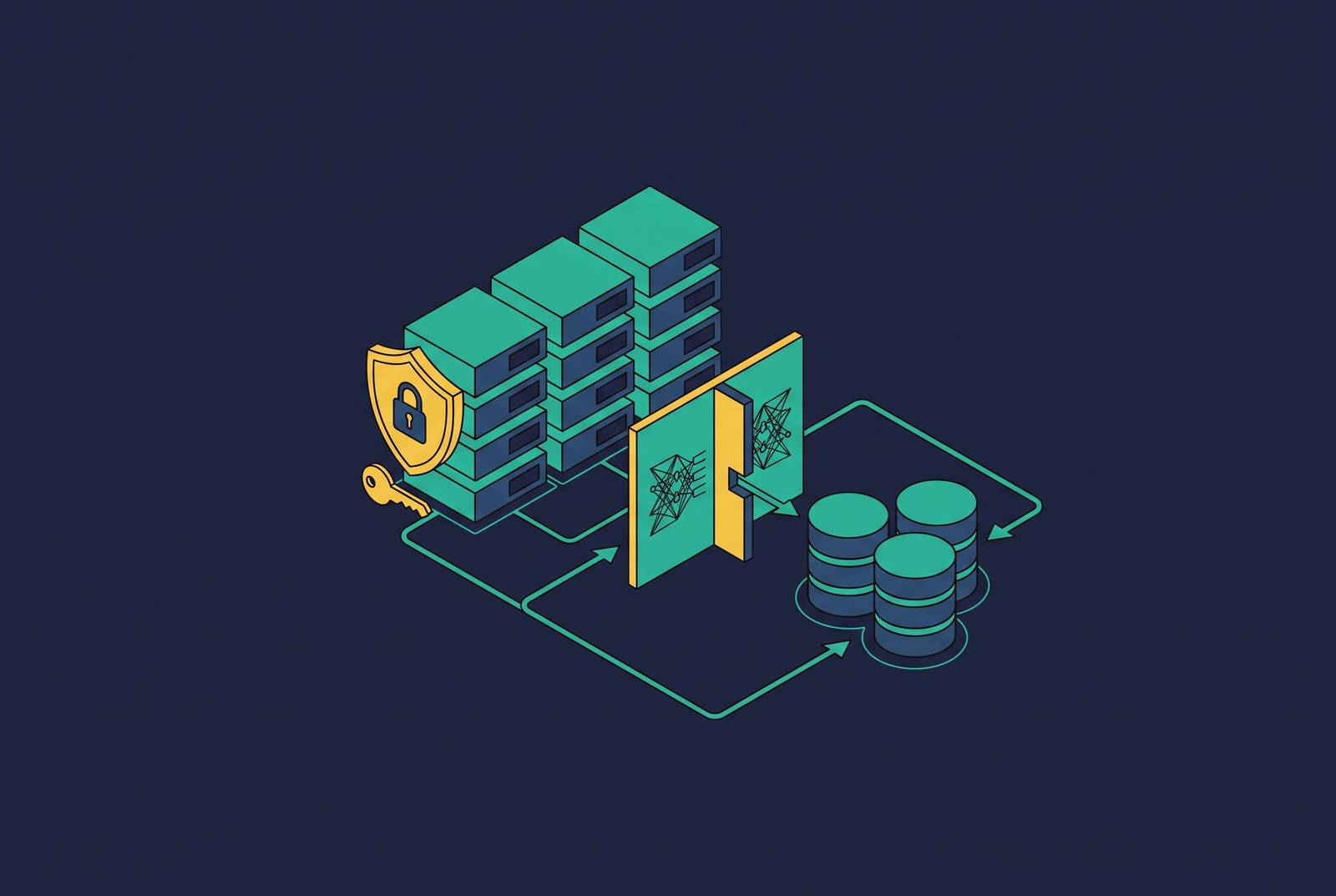
MCP server security for production data environments starts with controlling what agents can reach, alongside authenticating their requests. Pre-modeled, governed datasets served through MCP give agents the data they need without giving them connections to production databases. For API-first and agent-first teams, this is also the basis of headless analytics, which separates governed data from any particular dashboard or frontend.
Why MCP server security is an architectural problem, not a configuration one
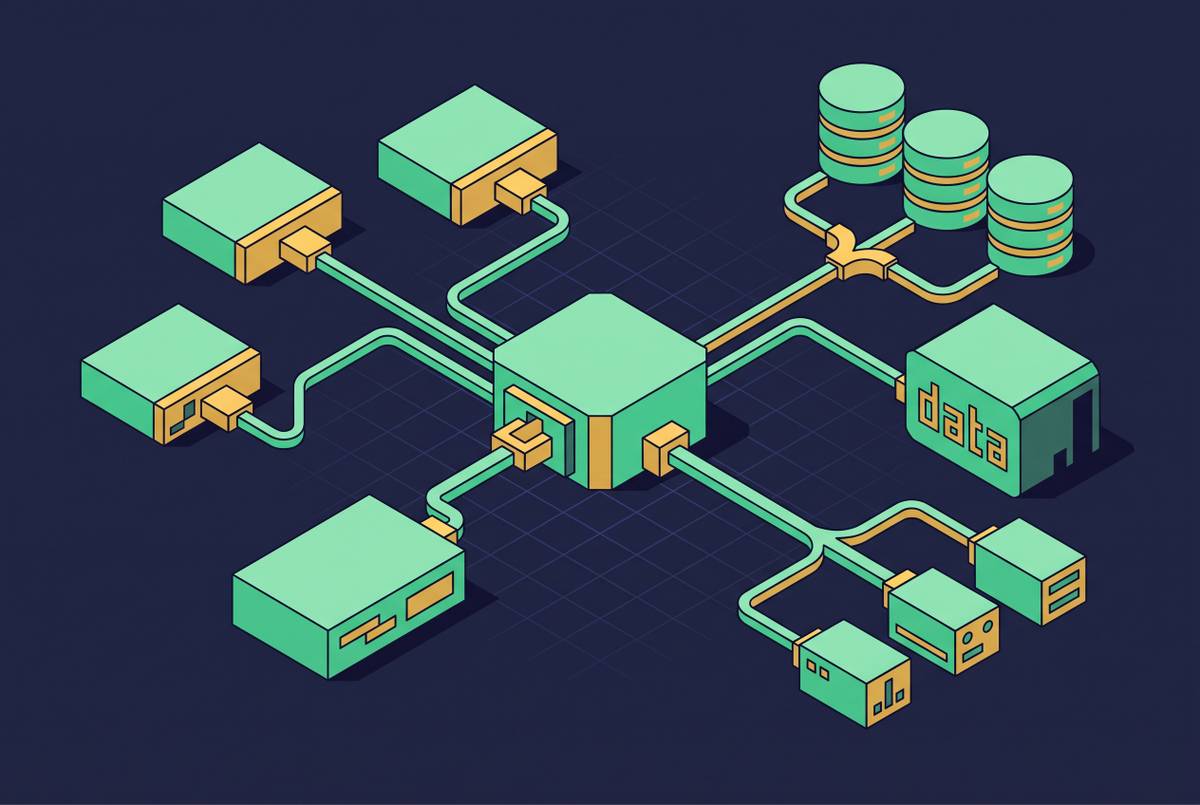
When teams treat an MCP server like a REST API, they tend to work on authentication, rate limiting, and deployment before looking at what the access model lets agents reach. REST APIs expose fixed, declared endpoints, while an MCP server exposes tools that an autonomous agent navigates dynamically. The agent interprets natural language and chooses what to invoke. Its judgment therefore becomes part of the threat boundary. Service accounts, API keys, and static roles were not built for agents that make these choices.
The MCP authorization specification provides a sound foundation through OAuth 2.1 with PKCE and separate audience claims per server. An agent connecting through MCP inherits the permissions of the underlying connection. Database credentials in the server configuration can expose the full connection string as well as the query tool. Depending on those permissions, compromise can permit a production dump, modification, or deletion. Hardening can constrain a breach, but it cannot remove database access that the architecture deliberately grants.
How fast the MCP attack surface has grown and what the exposure actually looks like
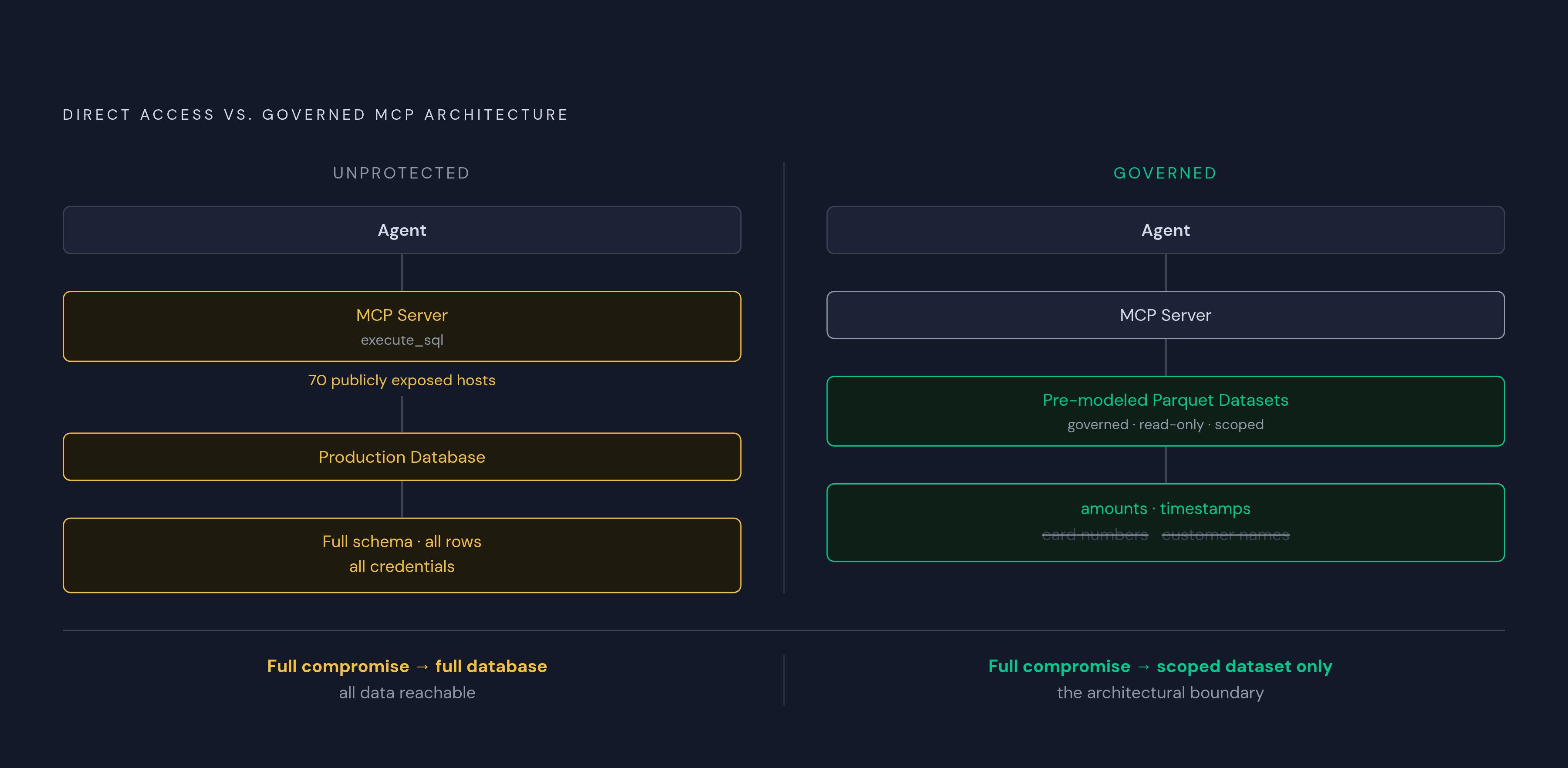
Its research found the execute_sql tool on 70 publicly exposed hosts. Most exposed servers still used the long-deprecated Server-Sent Events (SSE) transport. At least three had a feature for accessing medical records, so the exposure went well beyond developer tooling.
Trend AI Security also disclosed ZDI-CAN-28042 (Microsoft, CVSS 9.8), CVE-2026-5059 and CVE-2026-5058 (aws-mcp-server, both CVSS 9.8). The vulnerabilities in non-official Azure and AWS MCP server implementations allowed security-control bypass and unauthorized commands within cloud environments. OX Security disclosed a systemic RCE vulnerability in the MCP SDK's stdio transport affecting all language SDKs and up to 200,000 vulnerable instances. The cloud vulnerabilities illustrate how server exposure can escalate beyond the data interface. The chain runs from discovery to exploitation, credential theft, lateral movement, and full cloud compromise.
The five attack vectors that matter most for production data environments
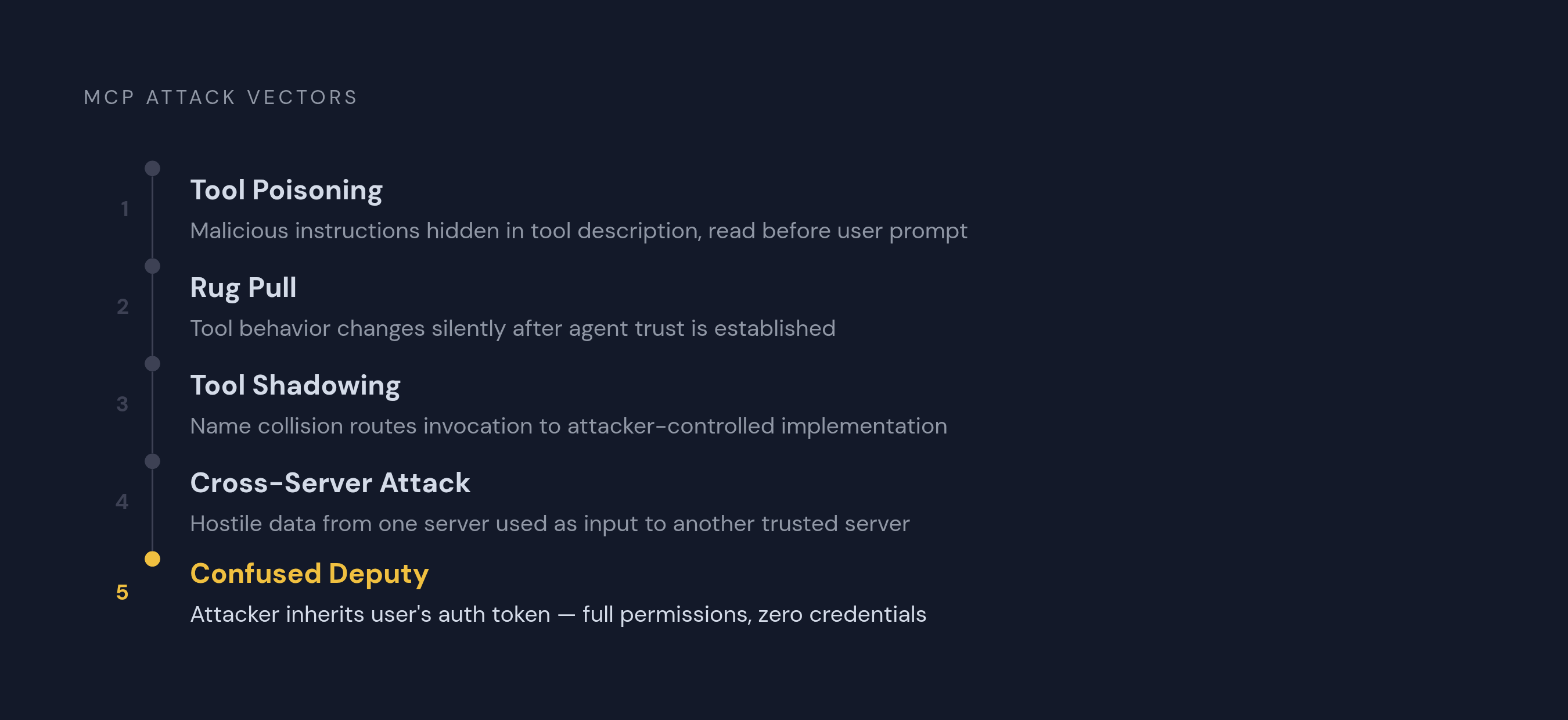
Tool poisoning places malicious instructions in a tool's description or metadata. The agent can therefore encounter hostile instructions before a user writes a prompt. With Rug pull / silent redefinition, a tool's behavior changes after the agent has come to trust it. The agent continues invoking it under assumptions that no longer hold.
Tool shadowing uses name collisions between servers to redirect invocations to an attacker-controlled implementation. Cross-server attacks take data from one trusted MCP server and feed it to another as hostile input. Confused deputy OAuth flaws exploit a different trust relationship, causing an agent to invoke a tool with the user's auth token at an attacker's request. The attacker thereby gains the effective permissions of the authenticated user.
Hardcoded credentials make these attacks worse by giving attackers a way to use the underlying connection beyond the tool surface. A server obtained from a public registry is also arbitrary code running with the user's credentials, making supply-chain compromise a first-class risk. Most open-source servers have not implemented the MCP authorization pattern, and a majority rely on long-lived static API keys or personal access tokens. Removing production credentials and schemas from the MCP surface limits the production-data consequences of these attacks, even though it does not eliminate the attacks themselves.
Prompt injection against database-connected tools remains the most consequential practical concern because read-only access does not prevent disclosure. Supabase advises against connecting AI agents directly to production data without additional safeguards. In a documented 2025 demonstration, researchers used a malicious support ticket to trick an agent into returning private SQL data to the public ticket thread. The agent held elevated service_role privileges that bypassed row-level security. Read-only permissions prevent write-back, but private data can still leave through the model's response.
Why the freshness-versus-safety tension pushes teams toward the riskiest access pattern
Direct production access often follows a genuine operational constraint: agents that make decisions about money, inventory, or customer experience need data that is up to date. A financial agent using outdated positions may propose actions that are already invalid. A support agent that reads a cached order table may give the wrong delivery status. When replicas or snapshots introduce unacceptable staleness, live production queries become the tempting alternative.
Better authentication cannot resolve this tension because it changes who can connect while leaving the connection's data exposure unchanged. A read-only production connection still reaches every row and table available to its service account. The architectural requirement is therefore a data layer that stays fresh while remaining isolated from production access.
What governance-first MCP architecture looks like in practice
A governance-first architecture defines the data an MCP server may serve before an agent starts using it. The strongest separation comes from a pre-modeled, isolated data layer rather than a more tightly secured production connection. That access layer should have read-only enforcement, role-based access control, attribute-based access control, and audit trails built into it. Row-level security limits which records a query returns, while column-level masking hides sensitive fields in queries that are otherwise allowed. A fraud detection agent can then get transaction amounts and timestamps without getting payment card numbers or customer names.
Supabase's vendor-official MCP guidance makes scope an explicit deployment decision. It advises restricting the server to a specific project, enabling read-only mode, and limiting available feature groups. Read-only mode runs queries as a restricted PostgreSQL user that can only use SELECT through the pg_read_all_data role and cannot use INSERT, UPDATE, or DELETE. Those restrictions reduce the available operations, but they do not turn broad read access into a narrowly modeled dataset. For experimentation, Supabase recommends branching, which provides an isolated database copy and requires a paid plan.
Other implementations show how governance can sit at different points in the access path. DBmaestro, launched April 2026, places MCP sessions within the requesting developer's existing platform permissions. Microsoft SQL MCP Server uses the Data API builder abstraction, where agents work through entities governed by RBAC, entity permissions, and policies. Its security surface remains consistent across REST, GraphQL, and MCP. Dreambase uses the same rule to govern modeled analytical data, giving agents pre-calculated metrics and datasets while keeping them from querying production.
Informatica, now a Salesforce subsidiary, shipped fully headless data management with native MCP support at Informatica World 2026 (May 19–21, 2026). Its Metadata Explorer MCP server supplies asset classifications and business terms before agents act. Its MDM MCP server addresses fragmented or duplicate records. These implementations differ in how completely they separate agents from the underlying database, but they place scope and context inside the access architecture. The generalizable principle is that the data layer defines the permitted view rather than relying on an agent to stay within bounds.
What analytics infrastructure gives Supabase and Postgres teams governed MCP and API access
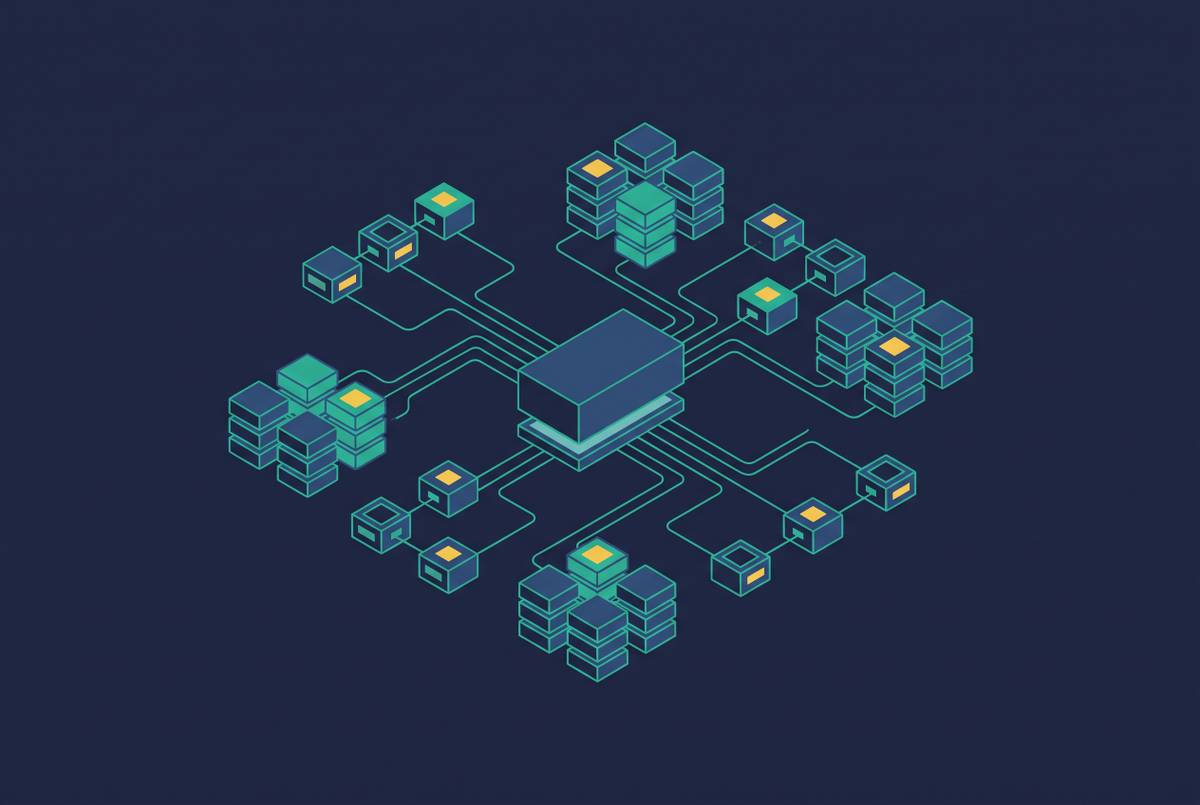
For Supabase and Postgres teams, pre-calculated datasets provide a concrete way to separate analytical consumption from production access. The datasets are modeled ahead of time, stored in a governed layer, and continuously refreshed. A dedicated MCP server exposes specific aggregations and dimensions rather than every table available to a service account. The agent inherits only the dataset's defined scope. This removes the raw SQL exposure represented by an unrestricted execute_sql tool.
One implementation is Dreambase, which models Postgres data into governed Parquet datasets queryable via DuckDB and exposes them through a single MCP server. Metrics are calculated ahead of time, so agents receive context without issuing live SQL against production. Row-level and column-level governance is part of the data model rather than something left to an agent's choice of WHERE clause. Human teammates and agents use the same metric definitions. The layer extends an existing Supabase project without schema changes, new infrastructure, or an ETL pipeline to maintain.
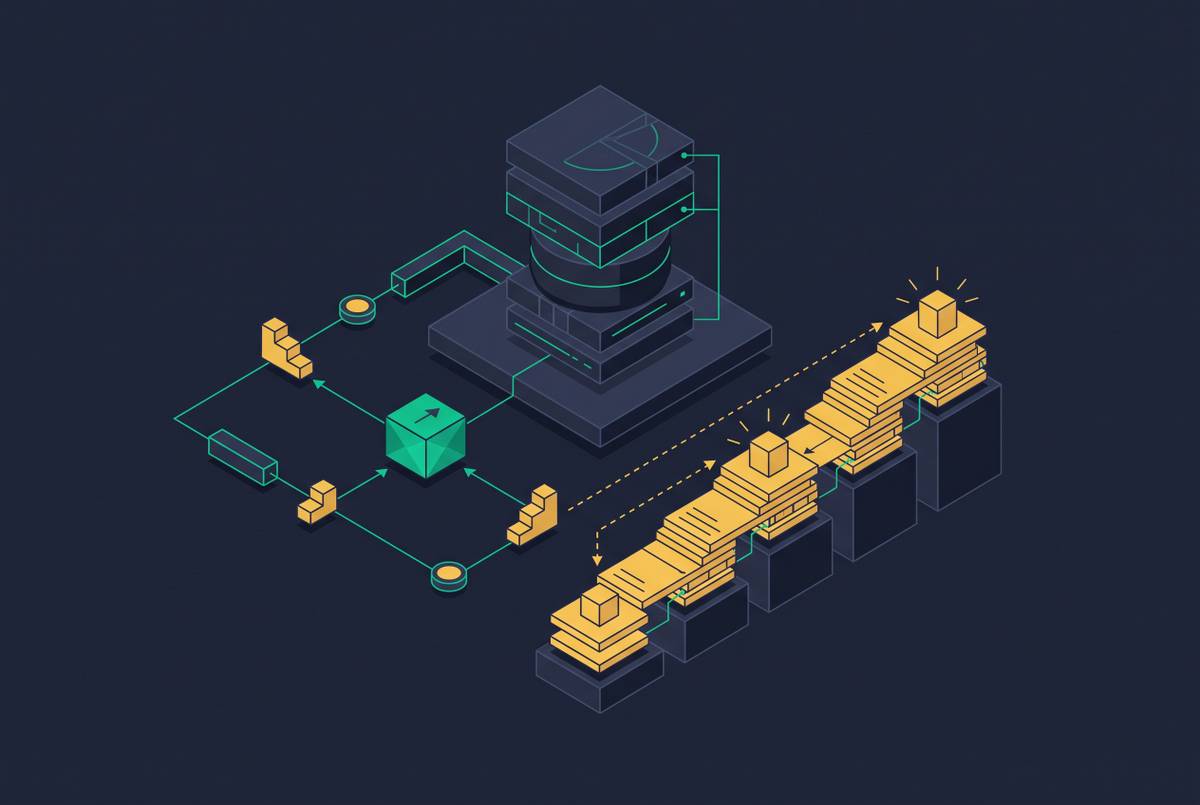
This is the relevant headless analytics pattern for teams that want API control without tying consumption to a prebuilt dashboard UI. Data is modeled and governed once, then used through MCP or API in dashboards, Slack reports, and AI agents, among other surfaces. The comparison criteria are the exposed dataset, the permission boundary, freshness, and consistency of metric definitions. ZoomInfo GTM.AI, generally available June 1, 2026, illustrates the wider market direction through a headless, MCP-native context layer with no interface of its own.
The hardening stack that sits on top of the governed data layer
A governed dataset boundary still needs transport, authentication, and runtime defenses. OAuth 2.1 with PKCE protects the initial handshake, while short-lived tokens of 5–30 minutes limit credential lifetime. Each MCP server should have its own audience claim. TLS 1.2 is the minimum, with TLS 1.3 preferred, and sensitive workloads call for mTLS between client and server. Certificate pinning for each tool adds a further check where the environment calls for it.
Credential handling and software provenance protect different parts of the deployment. Secrets should be injected through Vault with sub-hour TTLs and mounted as projected volumes. Container image signing with Sigstore or cosign, combined with SBOM attestation, guards against silent substitution of upstream server code. At runtime, the tool surface needs a deny-by-default allowlist with per-argument validation. A human must separately approve the use of any tool marked destructive.
For Supabase and Postgres deployments, agent context belongs in PostgreSQL rows rather than server memory so MCP servers can scale without downtime. For rate limiting across multiple replicas, each agent token needs sliding window buckets backed by a shared key-value store. Supabase's built-in row-level security supports tenant isolation in that topology. These controls reinforce the governed surface without requiring every server replica to hold its own authoritative state.
Middleware completes the boundary between LLMs and MCP servers by supplying authentication, rate limiting, audit logging, and approval workflows. Direct exposure bypasses that common enforcement point. Gateway options include Prefect Horizon, TrueFoundry, and Mintive (formerly MintMCP), which provide authentication, governance, and observability. The gateway is where the narrowly scoped data surface meets the rest of the production stack.
What teams running on Supabase should actually do first
First, decide what data the agent legitimately needs before configuring authentication. Do not connect an MCP server to production Supabase with write access or unrestricted read access. Scope access to the minimum required, preferably through a governed data layer. This decision establishes the maximum data exposure that later controls must protect.
Second, separate work that genuinely requires database access from analytical consumption. Schema exploration and migrations belong on a Supabase branch. Branching requires a paid plan, which makes that isolation an explicit deployment choice. Third, set the tool and argument allowlist before deploying agents, deny everything else by default, and have a human approve destructive operations.
Fourth, add OAuth 2.1 with PKCE, short-lived tokens, and one audience claim per server, while storing agent context in PostgreSQL rows from the start. Fifth, pre-model shared metrics and datasets rather than letting agents issue ad-hoc production SQL. For measures including MRR, churn, CAC, and LTV, a governed MCP dataset gives humans and agents a common definition. For Supabase teams choosing this separation, Dreambase is one implementation of the modeled data layer.
The final test assumes that the MCP server is fully compromised and asks what an attacker can reach. If the answer is only the governed dataset the server was designed to expose, the architectural boundary is doing its job. If the answer includes the full production database, all schemas, all tenants, or credentials in configuration, more hardening cannot repair the original access decision. The first step is to change that boundary.