Failure Modes When AI Agents Bypass the MCP Layer and Reach Supabase Directly
Direct Supabase access invites resets, leaks, and outages.
AI agents should query Supabase through a governed MCP gateway. Safe access requires scoped permissions, storage-layer security, controlled execution, and shared auditing, because bypassing that boundary exposes the database to destructive operations, privilege abuse, and prompt-injection-driven leakage. For analytics, the MCP server should query a governed semantic layer over a read-optimized copy, keeping analytical workloads off production tables.
Why direct Supabase access is a structural problem, not a configuration mistake
A raw database credential gives an agent the credential’s permissions, without request-scoped narrowing. The connection’s failure to distinguish task-specific authority from the credential’s full permissions is an architectural defect. Supabase’s CLI, dashboard, and Row Level Security system assume a human developer reviews context at each step. A probabilistic model optimizing for the next functional state does not supply that same judgment.
Powabase’s analysis identifies the gap between writing Supabase code fluently and operating its toolchain safely. Code generation can look competent while the surrounding execution remains unsafe, because knowing a command’s syntax is not the same as understanding when it must not run. A governed MCP interface supplies that missing boundary. Its role is to keep permissions scoped, actions bounded, and execution auditable. Removing it therefore removes a category of protection that exceeds what a better prompt can reliably provide.
Destructive migrations: why agents reach for db reset instead of migration up
From an agent’s perspective, supabase db reset offers a reliable path to a known-good environment, bypassing migration-history ambiguity, drift complaints, and half-applied states. The CLI surface does not signal that this irreversible operation belongs in a different category from migration up. What appears to be a useful repair can therefore destroy the data the task was meant to preserve.
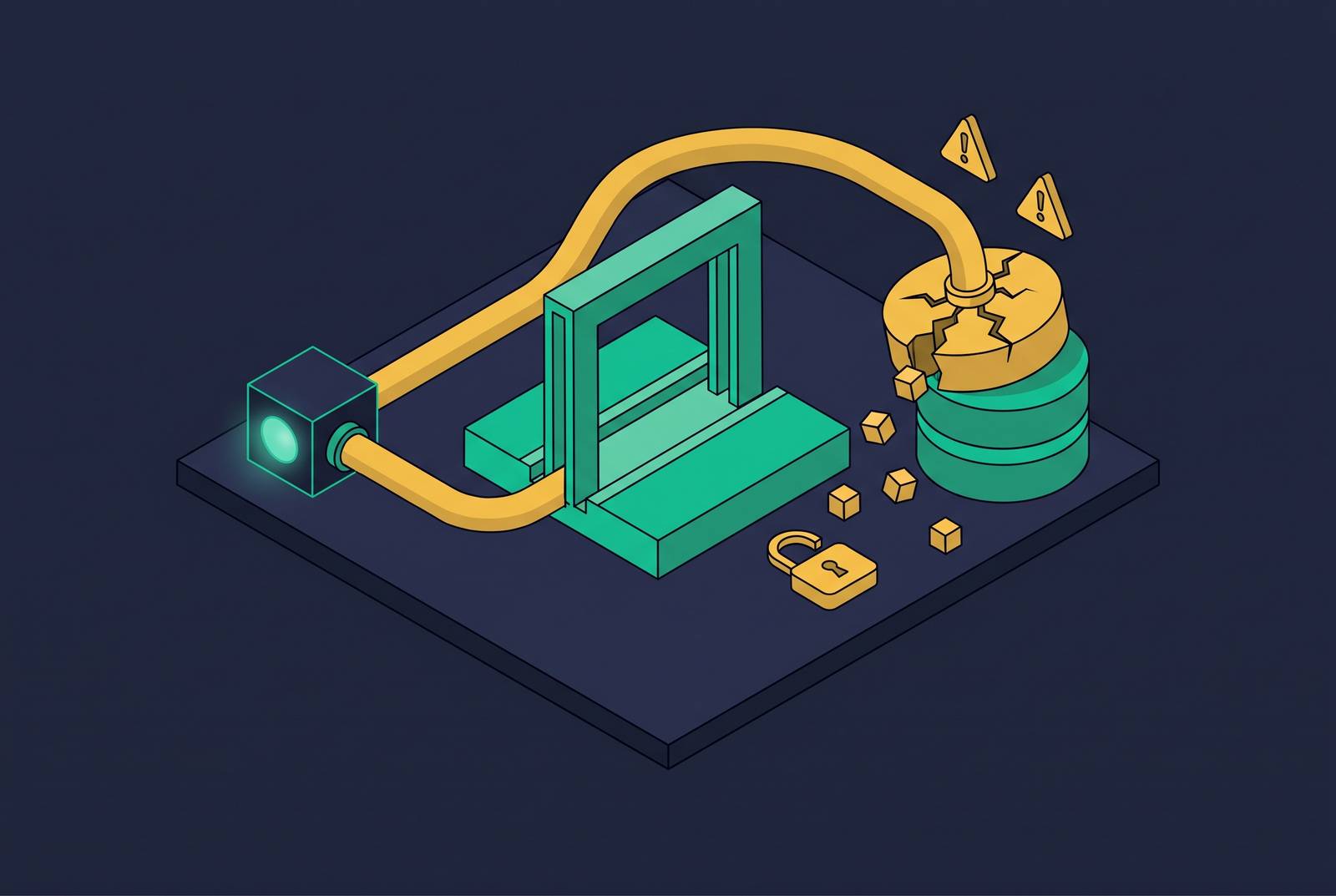
The analysis documents an incident in Anthropic’s bug tracker, Claude Code issue #57165, in which a subagent reset a local Supabase Postgres database. Every row was destroyed, wiping out much of the work already done during development, while source assets survived. This incident was confined to the local environment. Its post-mortem ranked an explicit forbidden-commands list in the subagent prompt as the highest preventive measure, a controller-side fix at zero cost. That finding exposes the missing control in the CLI itself, where no governed layer classified the command as destructive and required confirmation before execution.
Silent RLS failures: how plausible-looking policies become exfiltration vectors
Data exposure can be harder to detect than destruction. An AI-generated RLS policy may reference auth.uid(), mention user_id, and appear under a dashboard status showing RLS as “enabled” while still exposing every row to every authenticated user. The canonical anti-pattern is USING (true) without a TO role restriction, which allows every authenticated and anonymous user with table-level access to read every row.
Missing WITH CHECK clauses can leave write paths unprotected, while asymmetric CRUD coverage can secure SELECT but leave INSERT or UPDATE exposed. Agents also rarely verify whether views bypass RLS, allowing an innocuous name such as public_user_profiles to conceal an exfiltration path. A successful response provides no security verdict. PostgREST’s response does not distinguish a correctly enforced policy from a bypass simply by returning results, and direct access removes the governed checkpoint that should enforce policy correctness before production use.
CLI tooling loops that escalate to data loss
A tool can also produce feedback that makes a healthy environment look broken. A known Supabase CLI rough edge causes supabase db diff to regenerate the same migration for views containing JOINs. The agent applies the migration and expects the next diff to report no changes. Instead, the same migration comes back again. Repeating the apparently correct operation does not resolve the discrepancy, so the agent has reason to suspect a corrupted state.
The analysis describes how that reasoning can escalate to db reset. Without prior knowledge of false diffs, the agent cannot reliably distinguish a misbehaving tool from an environment that needs repair. A governed interface can interrupt it, classify the error, and require human confirmation before an irreversible action. Without structured error semantics, this is not simply a bug the agent should have caught, but a predictable consequence of giving uncertain reasoning unrestricted execution.
Incomplete MCP coverage that pushes agents into unstructured bash fallback
The Supabase MCP server reduces the blast radius, but an uncovered feature can push the agent back into the CLI through a bash environment. The analysis identifies that fallback as the point where the earlier failure modes return. A scoped tool call does little to protect the database if the agent can use raw credentials outside the governed interface in its next step.
Agents spend tokens re-deriving connection strings, re-listing tables, and re-checking authentication configuration because context is not shared across runs. The inefficiency accompanies a more consequential problem, because direct access remains available precisely when the structured surface stops helping. Comprehensive governance therefore includes the fallback path. Otherwise, nominal MCP adoption leaves an unstructured execution surface that adversarial content can exploit just as readily as the agent’s own mistaken reasoning.
Prompt injection as the attack that weaponizes direct access
Operational mistakes arise from the agent’s interpretation of its task. Prompt injection tries to change that understanding through untrusted content, such as a support ticket, document, or customer message. If the agent has elevated credentials, an instruction in that content can become a database tool call with authority the content’s author never had. Direct access makes that mismatch structural by leaving broad credentials available while the agent processes outside material.
Supabase’s post-mortem on the platform-level demonstration reported mitigations but stated that they “reduced risk but did not eliminate it”. In a separate section, it warned that “even in read-only mode, prompt injection remains the number one concern”. Read-only access does not prevent unauthorized disclosure of readable data.
CVE-2026-19333 is a separate vulnerability in a third-party tool. It is a command-injection flaw in NightTrek’s Supabase-MCP tool and gives an attacker who can influence agent inputs partial local access at the MCP server process’s privilege level. The maintainer patched it through pull request #3, merged November 9, 2026. The distinction is important because the two cases involve different failure mechanisms. Both, however, show why the damage depends on the privileges available beyond the untrusted input boundary.
Connection pool exhaustion and the performance failure that takes down production
As agents scale horizontally, they can use up all the connections the database allows if they bypass connection pooling. Agent-authored SQL adds another source of pressure through unbounded scans, accidental cross joins, and aggregations over full history. The agent optimizes for the answer, leaving retrieval cost unchecked. Without shared rate limits or query budgets, a confused or looping agent can degrade the database serving the product.
Connecting each agent through the official client SDK does not restore the missing mediator. With that approach, teams lose observability across agents, shared rate limiting, and the ability to change tool versions without redeploying agents. To protect production, agents need a shared operational boundary so that independent clients do not compete for the same database resources.
How should AI agents query Supabase through a governed MCP layer?
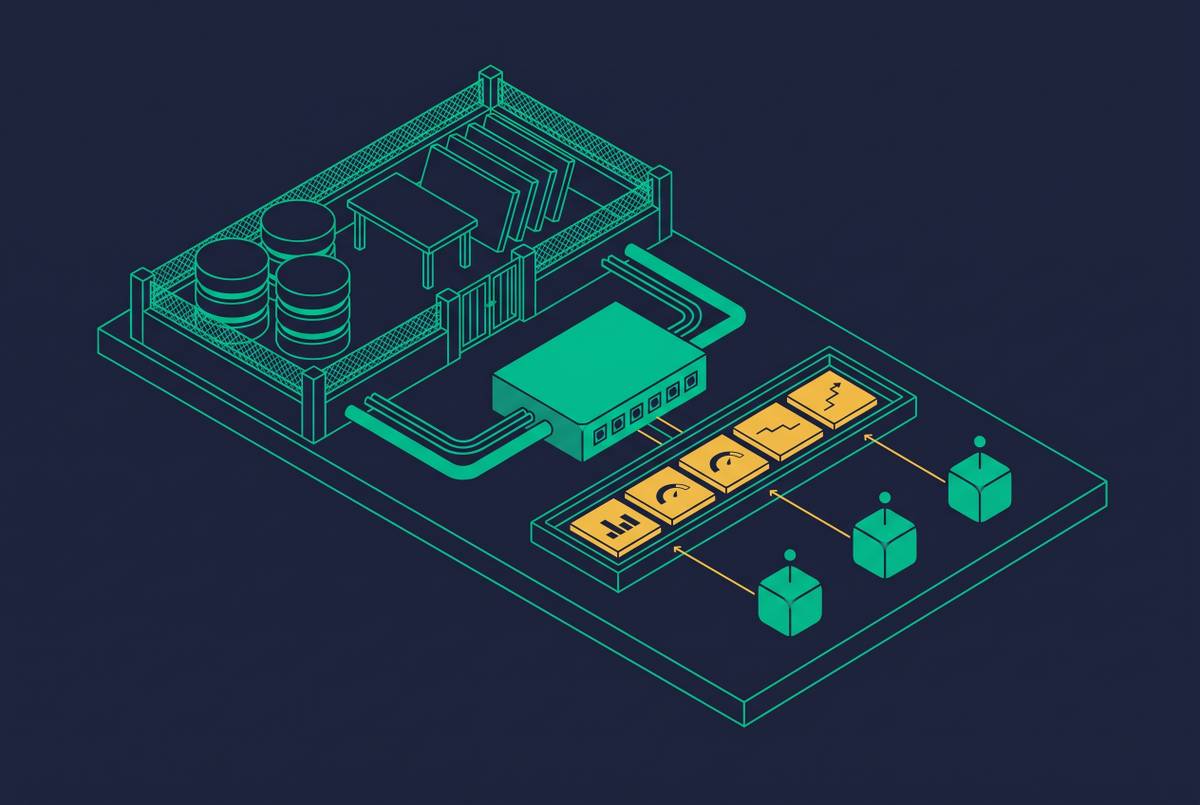
MCP standardizes a tool boundary, but it is not an authorization system. A correctly built implementation places that inspectable tool surface above storage-layer security. The distinction determines how an MCP server should be evaluated. Supabase MCP’s read_only flag, project pinning through project_ref, and feature-group selection provide useful scoping primitives. Those controls must be enforced at a gateway because the agent can influence the call inside individual tool servers.
Operational controls belong in that architecture as well. Postgres reads should use Supavisor’s transaction pool rather than direct connections, because horizontally scaling Edge Function instances can quickly exhaust max_connections. Tools classified as destructive or irreversible should require human confirmation, including schema changes, deletions, and external communications. Supabase’s enterprise-managed auth reaching GA on August 24 provides a relevant milestone toward the per-agent identity model, but identity still needs enforceable permissions around each agent’s work.
Why analytics workloads need a semantic layer beneath the MCP server, not raw table access
An MCP server pointed at raw tables still leaves the agent to reconstruct joins, grain, and metric definitions on every prompt. ArXiv research finds that adding a semantic document defining metric contracts raises text-to-SQL accuracy by 17 to 23 percentage points.
An LLM has no inherent mechanism to enforce who may see what, guarantee that SUM(revenue) and SUM(amount_captured) agree, or recognize that successive ARR figures use different grains. The disagreement begins before the query executes. When sales, finance, and product each maintain their own ARR definition, executives’ arguments about numbers displace discussion of decisions. Agents compound that disagreement when every session reconstructs another version.
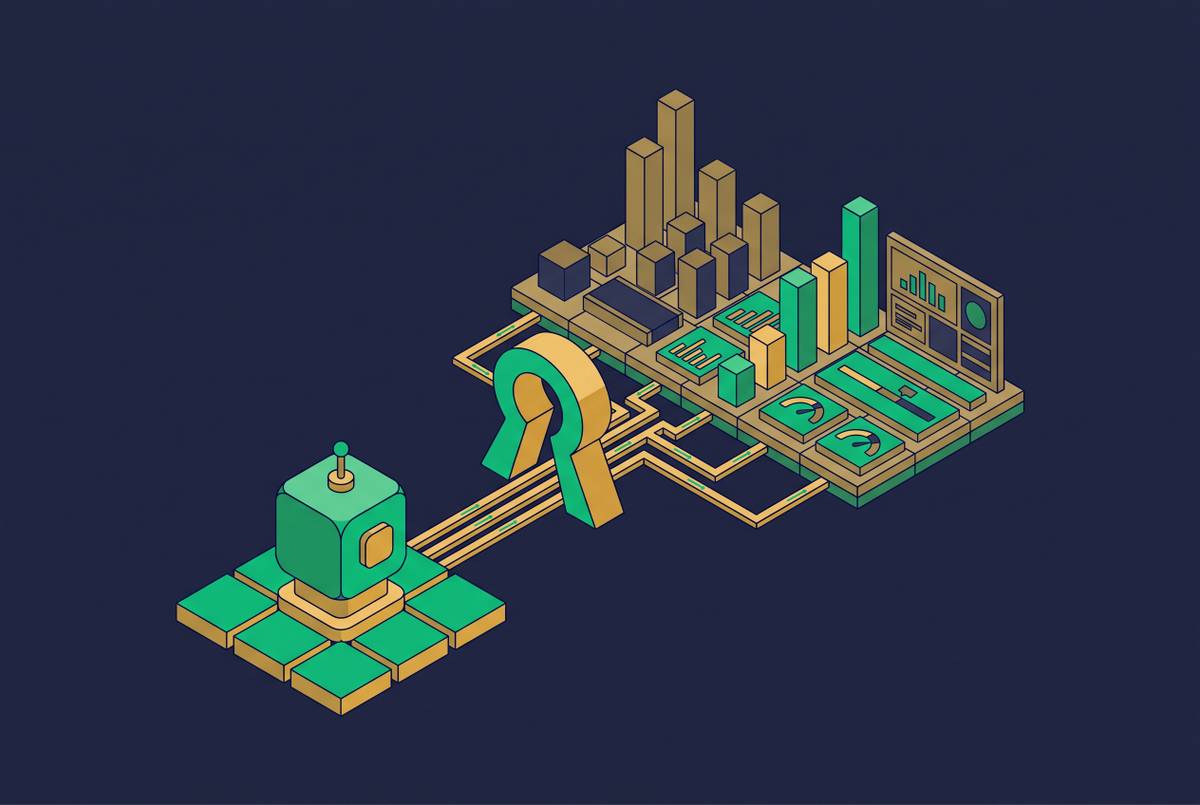
A semantic layer defines metrics, dimensions, and access policies once, so the agent selects from a governed set. Row-level and role-based rules are in force before the query runs. The appropriate pattern is an MCP server querying pre-modeled, pre-calculated datasets in a format such as Parquet through DuckDB, with agents kept away from the operational instance. This headless analytics data layer still needs scoped access rules, but they govern a read-optimized copy instead of exposing production tables to analytical workloads.
Observability as the prerequisite for catching these failures before they compound
Destructive migrations, RLS gaps, tooling loops, injection-driven leakage, and connection exhaustion require structured logging and query-level visibility to detect before they compound. Coverage must extend across the database, API layer, authentication flows, storage usage, Edge Functions, and client-facing errors. With that coverage, teams can link what an agent does to effects on the infrastructure that might otherwise seem unrelated.
Postgres exporter, Realtime Prometheus metrics, and structured logging should be installed from day one. Without p50/p95 latency dashboards, teams cannot reliably distinguish agent-driven load from product traffic until the database has already degraded. The MCP gateway should be the primary surface for observing agent behavior. Routing all MCP traffic through a dedicated gateway makes logging, rate limiting, and auditing shared services, rather than requiring teams to reconstruct tool activity from database logs afterward.
As deployments scale, governed data access and observability converge. The access layer defines what agents may do, while the observability layer shows what they actually execute, how often, and against which data. Both are part of the trust infrastructure. Teams that build them together can add agents within boundaries they can see and enforce, rather than give agents more room to act and learn the risks only after something fails.